
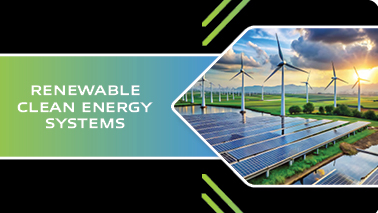
Renewable clean energy systems capture and manage power from naturally replenishing, zero-emission sources like solar, wind, hydropower, and geothermal. In 2026, the scope of these systems has expanded beyond simple generation to include sophisticated infrastructure like Battery Energy Storage Systems (BESS), smart grids, and green hydrogen production. This evolution is transforming the global energy landscape from centralized fossil-fuel plants to decentralized, resilient networks that allow for the deep decarbonization of heavy industries and transport.
Statistically, 2025 and 2026 represent a historic "tipping point," as renewables are now on track to surpass coal as the world's primary source of electricity generation. Global clean energy investment reached a record $2.3 trillion in 2025, with solar energy alone driving nearly 80% of new capacity additions. A major trend this year is the massive demand from AI data centers, which is pushing tech giants to fund "clean baseload" power like enhanced geothermal to supplement variable solar and wind. In India, non-fossil sources now exceed 52% of the total installed mix, reflecting a global surge in sustainable infrastructure.
The importance of this transition rests on climate stability, economic resilience, and public health. By displacing fossil fuels, these systems are the most effective tool for limiting global warming to 1.5°C and reducing the 7 million annual deaths caused by air pollution. Economically, renewables provide energy sovereignty by reducing dependence on volatile imported fuels, while acting as a massive job engine employing over 15 million people worldwide. As technology costs continue to plummet, clean energy has officially become the most cost-competitive option for a sustainable global future.
Share this page on your timeline
ALSO READ Renewable Clean Energy Systems Solar Photovoltaic Technologies Floating Solar Systems Wind Energy and Wind Technologies Hybrid Renewable Energy Systems Bioenergy and Biomass Waste-to-Energy Technologies Geothermal Energy Systems Marine and Tidal Energy Smart Grids Power Systems Microgrids and Distributed Energy Resources Power Electronics for Renewable Integration Grid Stability and Reliability Cybersecurity in Power Systems AI and Machine Learning in Power Systems Digitalization of Energy Systems IoT Applications in Energy Advanced Battery Technologies Grid-Scale Energy Storage Long-Duration Energy Storage Thermal Energy Storage Systems Hydrogen Production and Storage Fuel Cell Technologies Sustainable Power Energy Efficiency Energy-Efficient Buildings Smart Cities and Energy Systems Energy Management Systems Industrial Energy Optimization Energy Transition, Policy Future Systems Decarbonization Pathways Net-Zero Energy Systems Carbon Capture, Utilization and Storage Circular Economy Energy Policy and Regulation Climate-Resilient Energy Systems Electric Mobility and Charging Infrastructure Vehicle-to-Grid Technologies Future Power System Technologies Hydro Power
Tags
Bioenergy Conferences
Solar Energy Conferences 2026
Smart Grids Conferences Asia
Hydro Power Conferences Middle East
Green Hydrogen Technology Conferences
Power Technologies Conferences Europe
Biomass Meetings USA
Renewable Energy Conferences Europe
Wind Energy Conferences
Smart Grid Systems Conferences
Sustainable Power Generation Meetings
Power Electronics Conferences Europe
Renewable Energy Conferences
Circular Economy Conferences Japan