
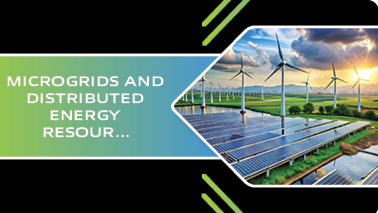
In 2026, Microgrids and Distributed Energy Resources (DERs) represent the shift from a centralized "top-down" utility model to a decentralized, resilient "bottom-up" energy ecosystem. DERs are small-scale power generation or storage technologies such as rooftop solar, small wind turbines, and residential batteries located close to the point of consumption. A microgrid is the localized grouping of these DERs that acts as a single controllable entity. Its defining feature is the ability to "island" or disconnect from the main grid during a blackout, allowing critical facilities like hospitals or data centers to maintain power independently.
Statistically, 2026 marks a major financial tipping point for this sector. The global microgrid market is valued at approximately $47.8 billion, growing at a robust 15.4% annual rate. This growth is driven by the declining cost of solar and storage, alongside rising grid instability from extreme weather. Currently, hardware (generation and storage assets) accounts for 75% of market share, while Asia-Pacific leads the world with a 41% share of total installations. A key 2026 trend is the rise of Microgrid-as-a-Service (MaaS), where businesses pay a monthly fee for energy resilience rather than footing the high upfront costs of installation, making sophisticated energy autonomy accessible to a broader range of commercial and industrial players.
The importance of these systems in 2026 lies in their dual role as "local protectors" and "grid supporters." While they provide 100% reliability for their owners, microgrids also offer ancillary services to the main utility, such as frequency regulation and peak shaving, which helps prevent regional blackouts. By generating power locally, they drastically reduce transmission losses energy wasted as it travels over long distances which can account for up to 5% of all electricity produced. As we integrate millions of electric vehicles (EVs) into the system, microgrids equipped with Distributed Energy Resource Management Systems (DERMS) are becoming essential to orchestrate charging and prevent localized transformer overloads, ensuring the grid remains stable during the clean energy transition.
Share this page on your timeline
ALSO READ Renewable Clean Energy Systems Solar Photovoltaic Technologies Floating Solar Systems Wind Energy and Wind Technologies Hybrid Renewable Energy Systems Bioenergy and Biomass Waste-to-Energy Technologies Geothermal Energy Systems Marine and Tidal Energy Smart Grids Power Systems Microgrids and Distributed Energy Resources Power Electronics for Renewable Integration Grid Stability and Reliability Cybersecurity in Power Systems AI and Machine Learning in Power Systems Digitalization of Energy Systems IoT Applications in Energy Advanced Battery Technologies Grid-Scale Energy Storage Long-Duration Energy Storage Thermal Energy Storage Systems Hydrogen Production and Storage Fuel Cell Technologies Sustainable Power Energy Efficiency Energy-Efficient Buildings Smart Cities and Energy Systems Energy Management Systems Industrial Energy Optimization Energy Transition, Policy Future Systems Decarbonization Pathways Net-Zero Energy Systems Carbon Capture, Utilization and Storage Circular Economy Energy Policy and Regulation Climate-Resilient Energy Systems Electric Mobility and Charging Infrastructure Vehicle-to-Grid Technologies Future Power System Technologies Hydro Power
Tags
Solar Energy Conferences 2026
Renewable Energy Conferences
Circular Economy Conferences Japan
Renewable Energy Conferences USA
Smart Grids Conferences Asia
Smart Energy Meetings 2026
Electric Vehicles Conferences
Renewable Clean Energy Conferences Middle East
Green Hydrogen Technology Conferences
Green Hydrogen Conferences Europe
Smart Grid Systems Conferences
Biofuels Conferences