
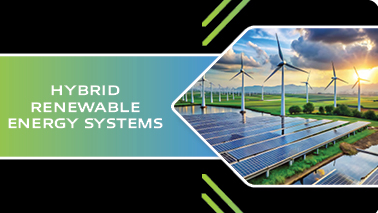
Hybrid Renewable Energy Systems (HRES) have become the gold standard for grid stability, moving the world beyond the limitations of variable, "weather-dependent" power. These systems combine two or more energy sourcesmost commonly wind and solar alongside an integrated storage medium like lithium-ion or flow batteries. By leveraging the complementary nature of natural resources, such as solar peaking during the day and wind typically increasing at night, HRES provides a much smoother and more reliable "baseload-like" output. This synergy significantly reduces the "duck curve" effect and minimizes the need for fossil-fuel backup plants.
The technical backbone of these systems is the Hybrid Power Plant Controller (HPPC), an AI-driven brain that manages the complex interplay between fluctuating sources. In 2026, these controllers use real-time satellite weather data to decide whether to send electricity directly to the grid, store it in batteries, or divert it to onsite green hydrogen electrolyzers. This optimization has led to a massive increase in "capacity credit," meaning grid operators can now rely on hybrid plants for firm power delivery almost as confidently as they once did with coal or gas.
Enhanced Reliability: The overlapping production profiles of wind and solar ensure a more consistent power supply across a 24-hour cycle.
Cost Efficiency: Shared infrastructure, such as transformers, transmission lines, and land, can reduce total project costs by up to 15% compared to building separate wind and solar farms.
Grid Resilience: Integrated storage allows the system to provide "ancillary services," such as frequency regulation and black-start capabilities, which are essential for preventing blackouts.
Maximized Land Use: Co-locating technologies allows developers to generate significantly more megawatt-hours per acre, a critical factor in densely populated regions.
A major 2026 trend is the shift toward Virtual Power Plants (VPPs), where thousands of small-scale hybrid systems in homes and businesses are networked together. Using blockchain-based energy trading, these decentralized hybrids can act as a single, massive utility-scale battery for the city, providing power during peak demand and earning revenue for the owners. This transition marks the move from a "passive" grid to an "active," self-healing energy ecosystem.
Share this page on your timeline
ALSO READ Renewable Clean Energy Systems Solar Photovoltaic Technologies Floating Solar Systems Wind Energy and Wind Technologies Hybrid Renewable Energy Systems Bioenergy and Biomass Waste-to-Energy Technologies Geothermal Energy Systems Marine and Tidal Energy Smart Grids Power Systems Microgrids and Distributed Energy Resources Power Electronics for Renewable Integration Grid Stability and Reliability Cybersecurity in Power Systems AI and Machine Learning in Power Systems Digitalization of Energy Systems IoT Applications in Energy Advanced Battery Technologies Grid-Scale Energy Storage Long-Duration Energy Storage Thermal Energy Storage Systems Hydrogen Production and Storage Fuel Cell Technologies Sustainable Power Energy Efficiency Energy-Efficient Buildings Smart Cities and Energy Systems Energy Management Systems Industrial Energy Optimization Energy Transition, Policy Future Systems Decarbonization Pathways Net-Zero Energy Systems Carbon Capture, Utilization and Storage Circular Economy Energy Policy and Regulation Climate-Resilient Energy Systems Electric Mobility and Charging Infrastructure Vehicle-to-Grid Technologies Future Power System Technologies Hydro Power
Tags
Renewable Energy Conferences
Smart Grids Conferences Asia
Wind Energy Conferences
Biofuels Conferences
Power Technologies Conferences Europe
Circular Economy Conferences Japan
Green Hydrogen Conferences Europe
Hydro Power Conferences Middle East
Green Hydrogen Technology Conferences
Smart Energy Meetings 2026
Biomass Meetings USA
Solar Energy Conferences 2026
Power Electronics Conferences Europe