
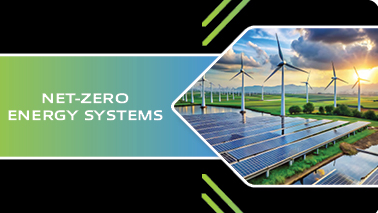
In a Net-Zero Energy System, the objective is to balance the greenhouse gases emitted into the atmosphere with an equivalent amount removed, primarily through a total transformation of how energy is produced, distributed, and consumed. This framework prioritizes deep, front-loaded emission reductions often aiming for a 90% or greater decrease in actual output leaving only a tiny fraction of "hard-to-abate" emissions to be neutralized through carbon removal technologies. To achieve this, the system relies on the massive scaling of zero-carbon generation, such as wind, solar, and nuclear power, which must be seamlessly integrated into a digitalized grid that handles the inherent variability of renewable energy.
The transition is guided by comprehensive Policy Frameworks that act as the structural "rules of the road." These policies move beyond simple subsidies to incorporate carbon pricing, strict building codes, and mandates for the "circularity" of energy components like solar panels and batteries. By early 2026, many nations have integrated these into industrial strategies that emphasize "energy sovereignty," aiming to onshore the manufacturing of critical tech like electrolyzers and high-capacity storage. These policies are designed to solve the "Energy Trilemma," ensuring that the move to net-zero does not compromise energy security or affordability for the general public.
In the Future Systems that emerge from these policies, the grid evolves from a one-way delivery service into an "internet of energy." This decentralized model utilizes Smart Grids and AI-driven orchestration to manage millions of "prosumers" homes and businesses that both consume and produce power. Key to this stability is the use of Long-Duration Energy Storage (LDES) and Green Hydrogen, which provide the multi-day and seasonal buffers necessary to keep the lights on during extended weather lulls. By linking electricity, heat, and transport into a single integrated network, future systems maximize every joule of clean energy, creating a resilient, low-carbon foundation for the global economy.
Share this page on your timeline
ALSO READ Renewable Clean Energy Systems Solar Photovoltaic Technologies Floating Solar Systems Wind Energy and Wind Technologies Hybrid Renewable Energy Systems Bioenergy and Biomass Waste-to-Energy Technologies Geothermal Energy Systems Marine and Tidal Energy Smart Grids Power Systems Microgrids and Distributed Energy Resources Power Electronics for Renewable Integration Grid Stability and Reliability Cybersecurity in Power Systems AI and Machine Learning in Power Systems Digitalization of Energy Systems IoT Applications in Energy Advanced Battery Technologies Grid-Scale Energy Storage Long-Duration Energy Storage Thermal Energy Storage Systems Hydrogen Production and Storage Fuel Cell Technologies Sustainable Power Energy Efficiency Energy-Efficient Buildings Smart Cities and Energy Systems Energy Management Systems Industrial Energy Optimization Energy Transition, Policy Future Systems Decarbonization Pathways Net-Zero Energy Systems Carbon Capture, Utilization and Storage Circular Economy Energy Policy and Regulation Climate-Resilient Energy Systems Electric Mobility and Charging Infrastructure Vehicle-to-Grid Technologies Future Power System Technologies Hydro Power
Tags
Wind Energy Conferences
Bioenergy Conferences
Green Hydrogen Technology Conferences
Green Hydrogen Conferences Europe
Circular Economy Conferences Japan
Renewable Energy Conferences Europe
Hydro Power Conferences Middle East
Power Electronics Conferences Europe
Electric Vehicles Conferences
Solar Energy Conferences 2026
Smart Grid Systems Conferences
Renewable Energy Conferences
Biofuels Conferences